
Table of Contents
The best power banks in 2026 for most people are small 10,000mAh packs with a built-in USB-C cable, like the Anker Nano (about $30) or the INIU Carry P55-E2 (about $25). iPhone 16 and 17 owners should look at the UGREEN MagFlow for 25W magnetic charging. Laptop users need something like the Anker Prime 26K, which pushes 140W from a single port. Hikers counting grams should buy the Nitecore NB10000 Gen 3.
Before you pick one, know three things the product pages bury. You get about 60 to 70% of the printed capacity. The headline wattage drops, sometimes hard, when you plug in a second device. And since March 27, 2026, the rules for flying with a power bank have changed on international routes.
Our Quick Picks for the Best Power Banks
| Pick | Best for | Capacity | Max output | Weight | Typical price |
|---|---|---|---|---|---|
| Anker Nano Power Bank (10K, 30W) | Most people | 10,000mAh | 30W | 210g | ~$30 |
| INIU Carry P55-E2 | Tight budgets | 10,000mAh | 45W | 185g | ~$25 |
| UGREEN MagFlow Qi2 25W | iPhone 16/17 owners | 10,000mAh | 25W wireless, 30W wired | 254g | $60 to $90 |
| UGREEN Nexode PB771 | Phone + laptop, one bag | 20,000mAh | 145W total | 555g | $100 to $180 |
| Anker Prime 26K (300W) | MacBook Pro and power users | 26,250mAh | 140W per port, 300W total | 600g | $184 to $230 |
| Nitecore NB10000 Gen 3 | Hiking and cold weather | 10,000mAh | 22.5W | 150g | $50 to $99 |
How We Chose These
We did not bench-test these six units ourselves for this guide, and we won’t pretend otherwise. We built the list by cross-checking published lab results from reviewers who measure output with USB meters (Macworld, Expert Reviews, How-To Geek, CleverHiker, and others), manufacturer spec sheets, and owner reports on Reddit, Slickdeals, and OzBargain. When a spec sheet and a lab test disagreed, we went with the lab test.
We also filtered out anything under an active safety recall and gave extra weight to two things most roundups skip: what happens to output when you charge two devices at once and whether the bank still makes sense under 2026 airline rules. It’s the same approach we use for every buying guide on Best Electronics Guide.

The Capacity Number on the Box Is Not What You Get
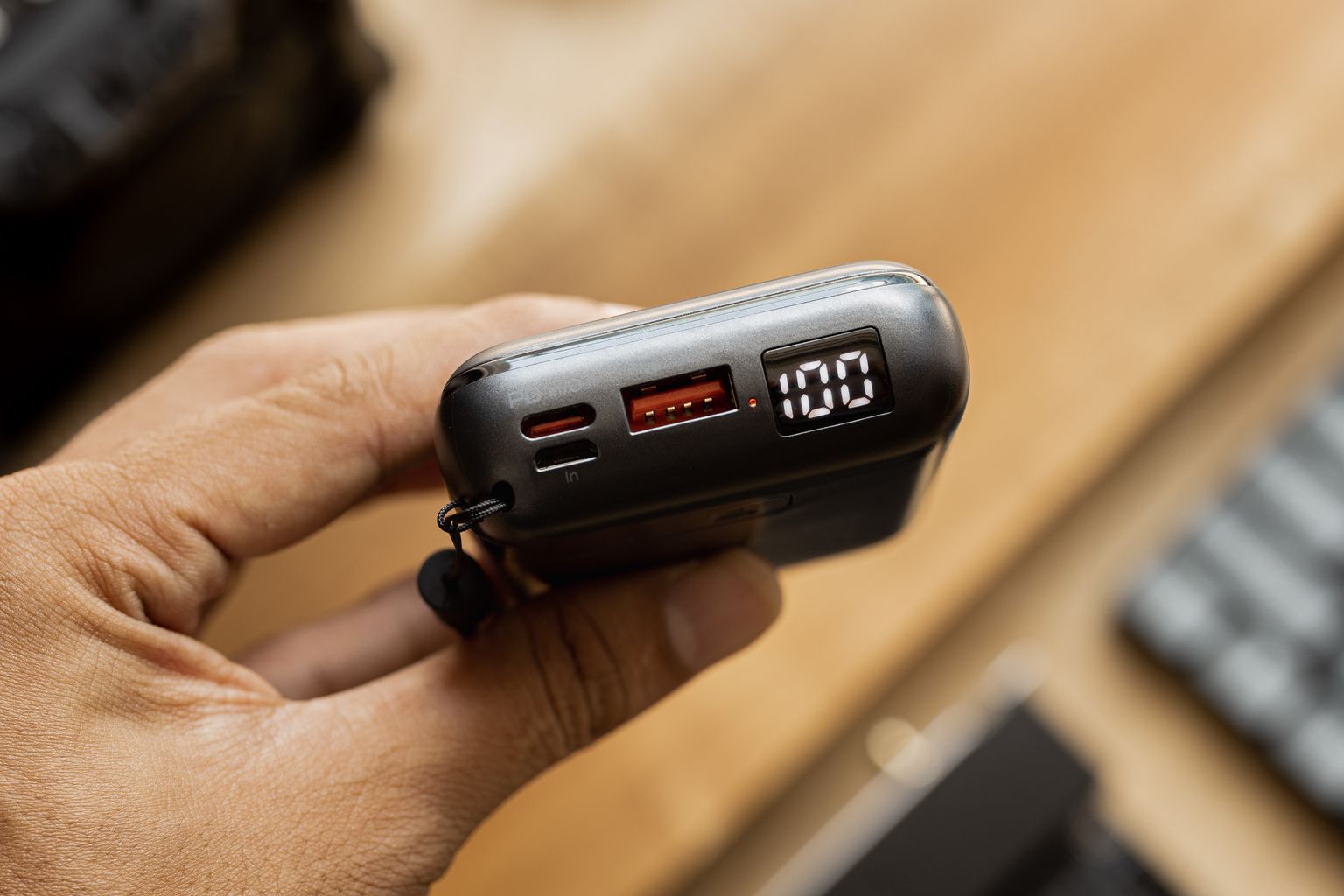
A power bank’s mAh rating describes its internal cells at around 3.7V. Your phone charges at 5V or higher, and the conversion wastes energy as heat. UGREEN’s own buying guide says you should expect about 65 to 70% of the rated capacity to reach your phone.
Nitecore is one of the few brands that prints the honest figure: its 10,000mAh NB10000 Gen 3 lists a rated energy of 5,400mAh at output voltage. Anker’s fine print on the Prime 26K suggests around 15,000mAh of real-world use from a 26,250mAh pack. Slickdeals commenters who test their own banks report the same pattern, with most 20,000mAh units measuring around 15,000 to 16,000mAh.
For planning, use this rule: a 10,000mAh bank gives a current flagship phone about one and a half full charges. A 20,000mAh bank gives you three. If a no-name listing claims 50,000mAh in a pocket-sized shell for $19, the number is fiction.
Best Power Banks in 2026: Detailed Picks
1. Anker Nano Power Bank (10K, 30W): Best for Most People
The Anker Nano is the one to buy if you want a single power bank and don’t want to think about it again. It carries 10,000mAh, outputs up to 30W, and has a USB-C cable built into the body, so you can’t leave the cable at home. The small display shows the exact percentage, which beats guessing from four LEDs.
At 30W it will fast-charge any current iPhone or Galaxy phone, and it recharges itself in about two hours from a 30W wall charger. Granite Alpine Lab clocks it at 7.4 oz (210g), and it sells for around $30 at full price.
Where it falls short: Anker rates its operating floor at 32°F (0°C), so it is a poor choice for skiing or winter camping. The built-in cable is short, which means holding the phone and bank together in one hand while it charges. And because Anker recalled several other 10K and 20K models in 2025, check that you are buying the Nano line and not an older listing (more on that in the safety section).
Buy it if: you commute, travel a few times a year, and want one pack that covers a phone plus earbuds.
2. INIU Carry P55-E2: Best Budget Power Bank
INIU sells the P55-E2 for $24.99 direct, and it undercuts almost everything with a real brand behind it. You get 10,000mAh, up to 45W from its USB-C ports, a braided USB-C lanyard cable, and a 3-year warranty, which is longer than Anker’s standard coverage. It weighs 6.5 oz (185g).
INIU claims 45W gets an iPhone 16 to 63% in 25 minutes, and that tracks with owner reports for the first stretch of a charge.
Where it falls short: The 45W figure has two catches. An OzBargain commenter citing a German review found the bank holds 45W for only 10 to 15 minutes before dropping to 30W. INIU’s own spec sheet shows the bigger catch: plug in two devices, and total output falls to 15W across both ports. That is slower than a basic phone charger. Treat this as a one-device-at-a-time bank.
Buy it if: you want a cheap, trustworthy backup for one phone and you rarely charge two things at once.
3. UGREEN MagFlow Qi2 25W (10,000mAh): Best for iPhone Owners
The MagFlow was the first power bank certified for Qi2.2, the standard that lifts magnetic wireless charging from 15W to 25W. Apple lists 25W wireless support on the iPhone 17 and 17 Pro, and the iPhone 16 lineup also takes it. UGREEN rates the MagFlow at 50% for an iPhone 17 Pro Max in about 38 minutes over wireless, against roughly 54 minutes at 15W. Still deciding which iPhone to pair it with? Our breakdown of which iPhone has the best camera can help.
It also has a 30W built-in USB-C cable that doubles as a strap, plus a second USB-C port, so you can charge three devices at once. Macworld gave it an Editors’ Choice and noted the bank stayed cool during testing. It weighs 254g.
Where it falls short: Macworld measured lower usable capacity than competing 10K magnetic banks. The 25W speed only applies to iPhone 16 and later; on an iPhone 12 to 15, it drops to 15W. The iPhone Air caps at 20W wireless. And when you use more than one output, UGREEN’s spec sheet shows total output limited to 5V/3A. At 254g stuck to the back of a phone, it also makes the phone top-heavy.
Buy it if: you own an iPhone 16 or 17 and want to charge in your pocket without a cable.
4. UGREEN Nexode PB771 (20,000mAh, 145W): Best for Charging Several Devices
The PB771 looks like a small tower, and it works like a travel charging station. It has 20,000mAh, a 100W USB-C port, a 45W USB-C port, a 22.5W USB-A port, and a fold-out Qi2 magnetic pad on top that also props your phone up at an angle. A color screen shows live wattage per port.
The multi-device claim holds up in testing. Expert Reviews measured 98W from the rear USB-C and 42W from the front at the same time, which is enough to charge a laptop and a tablet like the Samsung Galaxy Tab S9 together at near full speed. It recharges at 65W, in about 90 minutes from empty.
Where it falls short: At 555g it is heavy, and its tower shape doesn’t slide into a laptop sleeve the way a flat bank does. The wireless pad tops out at 15W (Qi2, not Qi2.2), so iPhone 17 owners won’t get 25W from it. List prices run $150 to $180, which is too much; wait for a sale, where it has dropped to around $100.
Buy it if: you travel with a laptop, phone, and tablet and want one bank on the hotel desk that handles all three.
5. Anker Prime Power Bank (26K, 300W): Best for Laptops
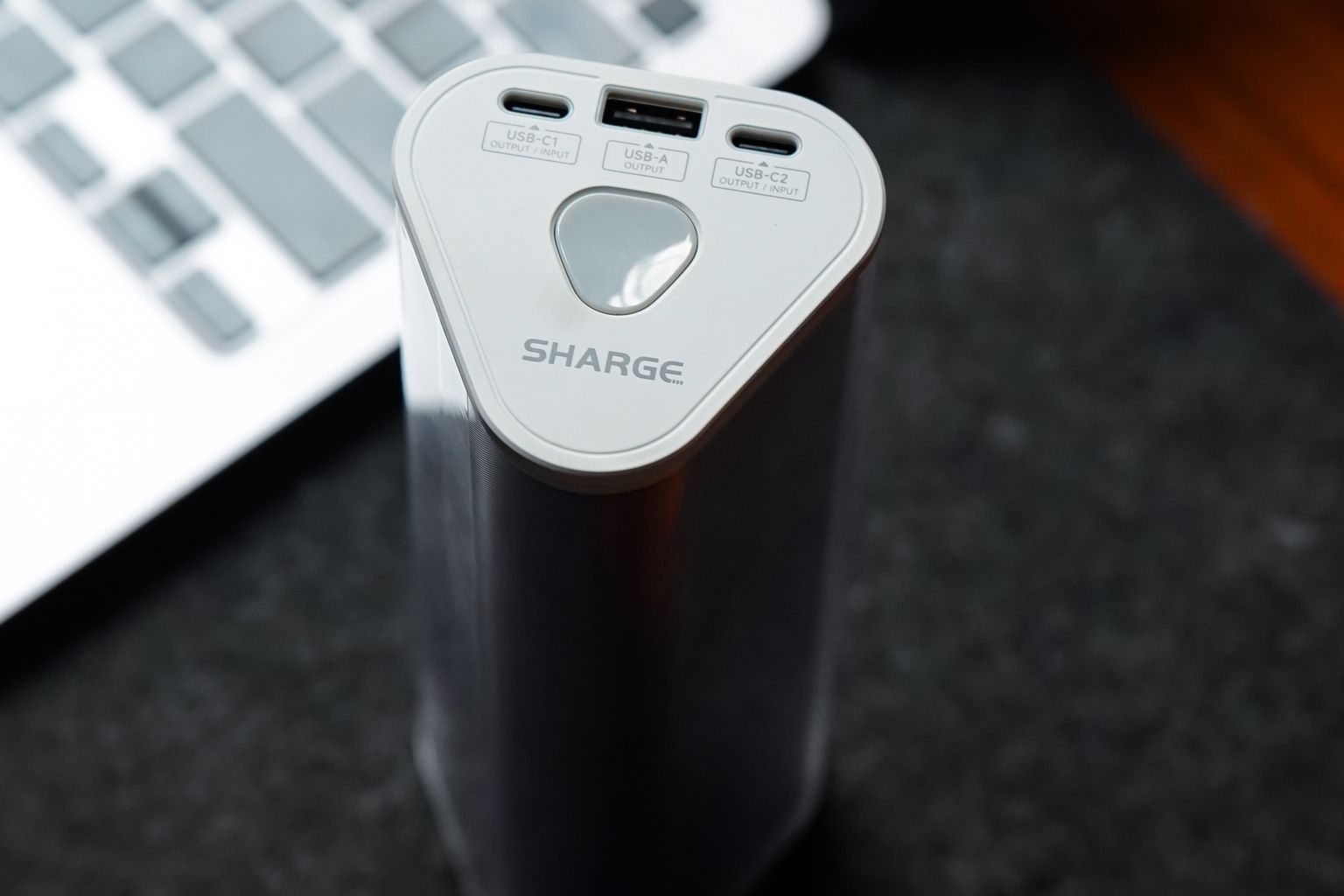
The Anker Prime 26K is what you buy when you need to fast-charge a 16-inch MacBook Pro from a battery. Both USB-C ports deliver 140W each, and the total output reaches 300W across three ports. That output level is rare in anything you can carry onto a plane. At 99.75Wh, it sits a fraction under the 100Wh limit for carry-on batteries.
Macworld’s test charged a 14-inch MacBook Pro 1.25 times on a single fill. The bank itself recharges at up to 250W when you use both USB-C inputs, and Anker says it goes from empty to 80% in about 35 minutes with two 140W chargers.
Where it falls short: Most people will never use that 300W. How-To Geek pointed out that the fastest US phone tops out around 80W, a Switch 2 takes 60W, and a Steam Deck takes 45W. Running near full output also drains the pack in under 20 minutes. It weighs about 600g, the charging base costs extra, and the list price is $230 (we’ve seen it at $184). Hitting the 250W recharge requires two 140W chargers, which few people own.
Buy it if: you work from airports and coffee shops on a MacBook Pro or a gaming laptop, and your time is worth more than the price gap.
6. Nitecore NB10000 Gen 3: Best for Hiking and Cold Weather
The Nitecore NB10000 Gen 3 is the lightest 10,000mAh bank most outdoor reviewers have tested. It weighs 150g (5.3 oz), roughly what a typical 5,000mAh pack weighs. It uses a carbon fiber frame, and the Gen 3 added rubber corners, two USB-C ports, 22.5W output, pass-through charging and an IPX5 splash rating.
Granite Alpine Lab lists its cold-weather floor at 14°F (-10°C), well below the Anker Nano’s 32°F. CleverHiker reported it still worked like new after several backpacking trips. The Trek’s Appalachian Trail hiker survey found its predecessor was the most popular power bank among thru-hikers.
Where it falls short: Recharging is slow; CleverHiker called the four-hour recharge average at best. The carbon fiber edges can feel sharp during long holds. Price swings are wild, from about $50 to $99 depending on retailer and tariffs. Nitecore has also announced a Gen 4 with silicon-carbon cells and an IPX7 rating, so check whether Gen 3 stock is being cleared at a discount.
Buy it if: you carry your power on your back and every gram matters.
Best Power Banks Compared Side by Side
| Feature | Anker Nano | INIU P55-E2 | UGREEN MagFlow | UGREEN PB771 | Anker Prime 26K | Nitecore NB10000 Gen 3 |
|---|---|---|---|---|---|---|
| Capacity | 10,000mAh | 10,000mAh | 10,000mAh | 20,000mAh | 26,250mAh | 10,000mAh |
| Single-port max | 30W | 45W (throttles to 30W) | 30W wired / 25W wireless | 100W | 140W | 22.5W |
| Two devices at once | Reduced | 15W total | 15W total | 98W + 42W tested | 140W + 140W | Reduced |
| Wireless | No | No | Qi2.2 25W | Qi2 15W | No | No |
| Built-in cable | Yes | Lanyard cable | Yes | No | No | No |
| Weight | 210g | 185g | 254g | 555g | 600g | 150g |
| Laptop charging | Small laptops only | Small laptops only | No | Yes | Yes | No |
| Warranty | Check listing | 3 years | 2 years | Check listing | Check listing | Check listing |
How to Choose the Right Power Bank
Pick capacity by what you charge, not by the biggest number
A 10,000mAh bank covers a day of heavy phone use plus earbuds. Go to 20,000mAh if you’re away from outlets for two or three days, charge a tablet, or share with a partner. Go to 25,000mAh or more only if you charge a laptop. Each step up roughly doubles the weight, and a 600g bank that stays home because it’s heavy does you no good.
Check the per-port and multi-port wattage
The number in the product title is usually the maximum from one port, or the total across all ports, and brands mix the two without warning. The Anker Prime’s 300W is a total; no single device gets more than 140W. The INIU’s 45W becomes 15W combined the moment a second cable goes in. Before you buy, open the spec sheet and look for the line that shows output with two or three ports in use. If a brand doesn’t publish it, assume it drops a lot.
For phones, 20W to 30W is enough. For a MacBook Air or a Switch 2, look for 60W or more from one port. For a 16-inch MacBook Pro under load, you need 100W to 140W.
Match the charging standard to your phone
iPhone 12 through 15 charge at 15W on MagSafe and Qi2. iPhone 16 and 17 can take 25W from a Qi2.2 bank. Recent Samsung and Pixel phones charge fastest over a USB-C cable using USB Power Delivery with PPS, which every bank on this list supports. Magnetic banks work with Android phones only through a magnetic case.
Flying With a Power Bank in 2026
This is where old advice gets people in trouble at the gate. The basics haven’t changed: FAA lithium battery rules and TSA guidance require power banks in carry-on bags only, never checked luggage. Batteries up to 100Wh need no approval, 100 to 160Wh need airline approval, and anything above 160Wh is banned. If an agent gate-checks your bag, take the power bank out first.
What changed in 2026:
- Two-bank limit on international flights. New ICAO rules that took effect March 27, 2026, limit passengers on international flights to two power banks in the cabin and ban recharging them on board.
- No in-flight use on many airlines. Singapore Airlines, Cathay Pacific, Emirates, Korean Air, Qantas, and all Lufthansa Group carriers (since January 15, 2026) ban using or recharging power banks during flights.
- No overhead bins. United banned storing power banks in overhead bins from March 1, 2026. Southwest allows use only if the bank stays in plain sight.
To convert mAh to watt-hours, multiply the mAh by 3.7 and divide by 1,000. A 20,000mAh bank is 74Wh. A 27,000mAh bank is about 99.9Wh, right at the line. Every pick on this list stays under 100Wh, but the Anker Prime (99.75Wh) sits close enough that you should expect a gate agent to read the label. Make sure the Wh rating is printed on the case; if it has worn off, some agents will refuse the bank.
Check for Recalls Before You Trust an Old Bank
Brand name alone doesn’t guarantee safety. In June 2025, Anker and the CPSC recalled about 1,158,000 PowerCore 10000 units (model A1263) after 19 reports of fires and explosions. In September 2025, Anker recalled about 481,000 more units across models A1647, A1652, A1257, A1681, and A1689 after 33 reported fires and explosions and 4 minor burn injuries. The recalled units were sold at Best Buy, Target, Amazon, Walmart, and TikTok between August 2023 and June 2025.
Anker traced the second recall to battery cells from a single supplier. The model number sits on the back or side of each bank. If you own an older Anker, check it on Anker’s recall page before your next trip. For any brand, stop using a bank that swells, smells hot, or makes the case bulge.
Which Power Bank Should You Buy?
- You want one bank for daily carry: Anker Nano (10K, 30W).
- You want the cheapest bank from a brand that honors warranties: INIU Carry P55-E2.
- You own an iPhone 16 or 17 and hate cables: UGREEN MagFlow Qi2 25W.
- You charge a laptop, phone and tablet on the same trip: UGREEN Nexode PB771.
- You need full-speed charging for a MacBook Pro: Anker Prime 26K.
- You hike, ski or camp: Nitecore NB10000 Gen 3.
- You fly international routes often: any 10,000 or 20,000mAh pick, and carry no more than two.
The Verdict on the Best Power Banks
Most people should buy the Anker Nano (10K, 30W) and stop there. It’s small, cheap, and the built-in cable solves the problem that kills most power bank trips: the cable left at home. Save money with the INIU P55-E2 if you only charge one device at a time. Spend more only when your devices demand it: the UGREEN MagFlow for 25W iPhone charging, the PB771 for a bag full of gadgets, the Anker Prime for a MacBook Pro, and the Nitecore for the trail.
Whatever you buy, read the multi-port output line on the spec sheet, plan on 60 to 70% of the printed capacity, and check your airline’s 2026 rules before you pack.
FAQs
Q. What is the best power bank to buy in 2026?
A. For most people, a 10,000mAh bank with a built-in USB-C cable and 30W output, such as the Anker Nano. It charges a phone about one and a half times, fits a jacket pocket, and costs around $30. Buy bigger only if you charge a laptop or spend several days away from outlets.
Q. Is a 20,000mAh power bank allowed on planes?
A. Yes. A 20,000mAh bank works out to about 74Wh, under the 100Wh carry-on limit, so it needs no airline approval. It must go in your carry-on, not checked luggage. On international flights, you can carry a maximum of two, and many airlines ban using it during the flight.
Q. How many times will a 10,000mAh power bank charge my phone?
A. Expect about one and a half full charges for a current flagship phone. Conversion losses mean only 60 to 70% of the rated capacity reaches your phone. Smaller or older phones get closer to two full charges.
Q. Is wireless charging from a power bank worse than a cable?
A. Wireless is slower and wastes more energy as heat, so you get fewer total charges from the same bank. A Qi2.2 bank closes much of the speed gap on iPhone 16 and 17, but a USB-C cable still delivers more of the battery to your phone.
Q. How long does a power bank last before it wears out?
A. A quality bank lasts several hundred full charge cycles before capacity falls off, which works out to two to three years of regular use. Heat shortens that. Don’t leave a bank in a hot car, and don’t store it fully drained for months.


3 comments
[…] Magnetic battery packs work the same way, and if you’re shopping for one, our roundup of the best power banks is a good place to compare capacity and […]
[…] wired. For long trips where outlets are scarce, pairing either set with one of the picks from our best power banks roundup solves the problem for […]
[…] over USB-C, so either works with a high-wattage USB-C power bank on the road. Our guide to the best power banks points out which ones push enough wattage to charge a laptop instead of only slowing the […]