
Table of Contents
Quick answer: A refurbished laptop is a used or returned laptop that has been tested, repaired, wiped, and resold with a warranty. It’s worth buying if the seller gives you at least a 90-day warranty, a return window, and a model that runs Windows 11 or current macOS.
A refurbished laptop is a pre-owned or returned computer that a manufacturer, retailer, or specialist refurbisher has inspected, repaired where needed, wiped, reloaded with a clean operating system, and resold with a warranty. That testing and warranty are what separate it from a used laptop sold as-is. For most people, a refurbished laptop is worth buying: you get more hardware for your money, and a well-restored machine handles everyday work just like a new one.
The catch is that “refurbished” isn’t a regulated term, so the quality depends on who did the work and what they promise afterward. This guide explains where refurbished laptops come from, how the refurbishment process works, what the A, B, and C grades mean, and how long these machines last. You’ll also get the checks that separate a real bargain from a tired laptop with a fresh coat of polish.
Refurbished laptop at a glance
| Question | Short answer |
|---|---|
| What it is | A returned or pre-owned laptop that has been tested, repaired, wiped, and resold |
| Typical warranty | 90 days to 1 year (Apple and Back Market: 1 year; Amazon Renewed: 90 days) |
| Main sources | Customer returns, business lease returns, demo units, overstock |
| Grades | A (near new), B (light wear), C (visible wear); grades describe looks, not performance |
| Expected lifespan | Often 3 to 5 more years of normal use from a good model |
| Worth it? | Yes for most buyers, if the seller offers a warranty and returns |
What is a refurbished laptop, exactly?
A refurbished laptop is a laptop that went back to a manufacturer, retailer, or specialist refurbisher, was checked and fixed, and was put back on sale with a warranty. Some of these machines had years of office use. Others were opened once, disliked, and returned within a week. Both can end up with the same “refurbished” label, which is why the details on the listing matter more than the word itself.

Where do refurbished laptops come from?
Most refurbished stock comes from a handful of predictable places:
- Customer returns. Someone bought it, changed their mind, or found a small fault inside the return window. Once a box is opened, many retailers can’t sell it as new.
- Business and school lease returns. Companies often lease fleets of laptops and swap them out every few years. These “off-lease” machines make up a big share of refurbished Windows laptops, which is why you see so many Dell Latitude, Lenovo ThinkPad, and HP EliteBook models on refurb sites.
- Display and demo units. Laptops that sat on a store shelf for shoppers to poke at.
- Overstock and cancelled orders. Brand-new units that never sold through normal channels.
- Review samples. Machines loaned to reviewers and then sent back.
Off-lease business laptops are worth paying attention to. They were built for daily office abuse, they’re easy to repair, and they tend to drop in price fast once a company retires them. If you’re weighing two business lines against each other, our HP EliteBook vs ProBook comparison shows how much the build quality differs between tiers, and that gap still matters on a refurbished unit.
Everything You Should Know Before Buying a Refurbished Laptop
If you only remember one section of this guide, make it this one. These are the facts that decide whether a refurbished laptop turns out to be a good deal or a headache.
- “Refurbished” isn’t a regulated term. Any seller can use it. A wipe and a quick check can carry the same label as a full rebuild with new parts, so judge the seller, not the word.
- Grades describe looks, not performance. A Grade C laptop should run the same as a Grade A unit of the same model. Pay extra for a better grade only if the cosmetic condition matters to you.
- Warranties vary a lot. Amazon Renewed gives you 90 days, while Apple Certified Refurbished and Back Market give you a year. Treat 90 days as the minimum and don’t buy without one.
- The battery wears out first. Ask for the battery health or cycle count before you pay, or buy from a program that promises a minimum capacity.
- Operating system support matters. Windows 10 support ended on October 14, 2025. A cheap laptop that can’t run Windows 11 isn’t a bargain.
- Off-lease business laptops are the best value. ThinkPad, Latitude, and EliteBook models are built to last and easy to repair, and they’re easy to find on refurbished stores.
- Check for locks from the previous owner. A laptop that still has a BIOS password, Apple Activation Lock, or company device-management enrollment can be impossible to set up. Reputable refurbishers remove these, so confirm the listing says the laptop is unlocked.
- Compare against the price of a new laptop. If a refurbished model costs only a little less than a new one with similar specs, the new laptop’s longer warranty is usually worth the difference.
- Test it the day it arrives. Check every port, key, and feature while you can still return it.
How is a laptop refurbished?
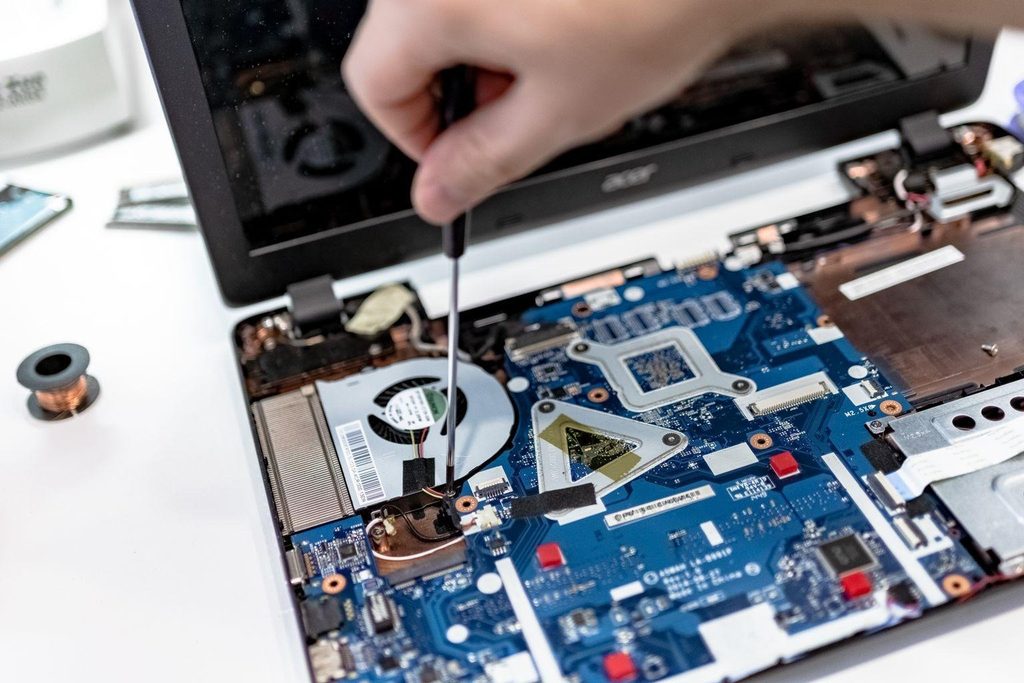
A proper refurbishment follows roughly the same steps whether a manufacturer or a third-party shop handles it:
- Inspection and diagnostics. A technician checks the screen, keyboard, trackpad, ports, speakers, webcam, Wi-Fi, and battery health, and runs hardware tests on the memory, storage, and processor.
- Repair or part replacement. Faulty parts get swapped. That might be a worn keyboard, a weak battery, a failing SSD, or a cracked bezel. Better refurbishers use original or equivalent-quality parts.
- Data wipe. The storage is securely erased so nothing from the previous owner remains.
- Fresh software. The operating system is reinstalled with current drivers and updates.
- Cleaning. Dust comes out of the fans and vents, and the case, keys, and screen are cleaned.
- Final testing and grading. The laptop is stress-tested, then given a cosmetic grade before it’s boxed up with a charger and a warranty.
How thorough each step is varies a lot. Apple, for example, says every product in its Certified Refurbished program is tested, uses genuine Apple replacement parts where needed, and ships with Apple’s standard one-year limited warranty. A small seller on a marketplace might do a quick wipe and a five-minute check. Same label, very different machine.
What is the difference between refurbished, used, renewed, and open-box laptops?
The difference comes down to testing and warranty. A refurbished laptop has been inspected, repaired, and resold with a warranty, a used laptop is sold as-is, “renewed” is Amazon’s name for refurbished, and open-box means a returned item that was barely used. Here’s how they compare:
| Term | What it usually means | Tested and repaired? | Typical warranty |
|---|---|---|---|
| Refurbished | Returned or pre-owned, then inspected, fixed, and resold | Yes | 90 days to 1 year or more |
| Certified refurbished | Refurbished by the manufacturer or an approved partner to its standards | Yes, to brand standards | Often 1 year |
| Renewed | Amazon’s name for refurbished items sold through its Renewed program | Yes, by approved sellers | 90 days standard, 1 year for Renewed Premium |
| Open-box | Returned, often barely used, resold at a discount | Usually checked, rarely repaired | Often the original manufacturer warranty |
| Used | Sold as-is by a previous owner or reseller | No guarantee | Usually none |
The short version: a used laptop is a gamble, a refurbished one is a used laptop that someone has checked and stands behind, and a certified refurbished one comes with the brand’s own backing.
What are the main types of refurbished laptops?
There are three main types of refurbished laptops: manufacturer refurbished, third-party refurbished, and laptops sold through marketplace programs like Amazon Renewed and Back Market. The seller tells you more about a refurbished laptop than the model number does. We checked the warranty terms below in October 2026; they can change, so confirm them on the listing.
Manufacturer refurbished
These come straight from the brand: Apple Certified Refurbished, Dell Refurbished, Lenovo Outlet, HP’s refurbished store, and similar programs. You pay a bit more than you would from a third party, but you get original parts and the cleanest warranty terms. Apple’s one-year warranty matches what it offers on new Macs. Dell’s refurbished store has historically offered a shorter 100-day limited warranty with an option to extend, so check the current terms on the listing before you buy.
Third-party refurbished
Specialist refurbishers buy laptops in bulk, often from corporate leases, and restore them in their own workshops. Quality ranges from excellent to sloppy. The good ones publish their testing process, describe cosmetic grades clearly, and offer at least a 90-day warranty, often longer.
Marketplace programs
Amazon Renewed and Back Market don’t refurbish laptops themselves. They set standards for the sellers who list there. Amazon backs Renewed products with a 90-day guarantee (one year for items labeled Renewed Premium), and Back Market advertises a minimum one-year warranty on its listings. The individual seller still matters, so read their ratings and recent reviews.
What do refurbished laptop grades mean?
Refurbished laptop grades describe cosmetic condition, usually on an A, B, C scale, where A looks almost new and C shows obvious wear. The names vary by seller, but they usually map to something like this:
- Grade A (or “Excellent”): Looks close to new. You might find faint marks if you hunt for them.
- Grade B (or “Good”): Light scratches or scuffs on the lid or palm rest that you’ll notice, but nothing that affects use.
- Grade C (or “Fair”): Obvious wear, like deeper scratches, small dents, or shiny keys. Works fine, looks used.
One thing grades usually do not describe is performance. A Grade C laptop and a Grade A laptop of the same model should run identically if both were refurbished properly. If you’re happy to live with a scratched lid, the lower grade is often the smartest money you’ll spend. Just don’t accept a grade that hides screen problems. A scratch on the lid is cosmetic. Dead pixels or a pressure mark on the display are not.
Is a refurbished laptop worth buying?

For most people, yes, as long as you buy from a seller with a real warranty and a clear return policy. You get more laptop for your money, and you skip the steepest part of the depreciation curve.
Why a refurbished laptop is often the smarter buy
- Better hardware for the same budget. The money you’d spend on a new entry-level laptop with a dim screen and a plastic body can often buy a refurbished business model with a sturdier chassis, a better keyboard, and more RAM.
- Business-grade build quality. Lines like ThinkPad T-series, Latitude 5000 and 7000, and EliteBook were designed to survive years of commuting and conference rooms. Many are also easier to open and upgrade than thin consumer laptops.
- Less e-waste. The world generated a record 62 million tonnes of electronic waste in 2022, and only about 22% of it was documented as properly collected and recycled, according to the UN’s Global E-waste Monitor 2024. Keeping a working laptop in use for a few more years is one of the simplest ways to avoid adding to that pile.
When buying new makes more sense
Refurbishing isn’t the right call for everyone. Buy new if you need the very latest processor or graphics for heavy gaming or video work, since refurbished stock lags a generation or two behind. Buy new if you want a long manufacturer warranty with accidental damage options. And skip any refurbished Windows laptop that can’t run Windows 11. Microsoft ended support for Windows 10 on October 14, 2025, and Windows 11 needs a reasonably recent processor plus TPM 2.0 (the full list is on Microsoft’s Windows 11 specifications page). Older machines from around 2017 and earlier often fail that check, so a bargain price on one can leave you with an unsupported system.
How long do refurbished laptops last?
A well-refurbished laptop from a decent brand can easily give you three to five more years of normal use. How long yours lasts depends mostly on three things: how old the model was when you bought it, the condition of the battery, and the type of storage inside.
The battery is the part that wears out first. Lithium-ion cells lose capacity with every charge cycle, so a laptop that spent four years plugged in at a desk may come with a tired battery unless the refurbisher replaced it. Some programs set minimums. Back Market, for instance, says every MacBook it sells must arrive with at least 85% of its original battery capacity. If a listing says nothing about battery health, ask.
Storage matters too. Make sure the laptop has an SSD rather than an old spinning hard drive. An SSD makes even an older processor feel quick for browsing, documents, and video calls.
What should you check before buying a refurbished laptop?
Before buying a refurbished laptop, check the warranty, the return window, battery health, the operating system, the specs, the screen, and who did the refurbishing. Here’s what to look for in each:
- The warranty. Ninety days is the bare minimum. A year is better, and it’s common from the bigger programs.
- The return window. You want at least 14 to 30 days to test the laptop yourself.
- Battery health. Ask for the capacity or cycle count. On Windows you can generate a battery report by running powercfg /batteryreport in Command Prompt. On a Mac, open System Settings > General > About > System Report > Power to see cycle count and condition.
- Operating system and license. Confirm it ships with a genuine, activated copy of Windows or macOS, and that the hardware supports the current version.
- Specs for your needs. For everyday use, look for at least 8GB of RAM (16GB if you keep lots of browser tabs or apps open) and a 256GB SSD or larger.
- The screen. Resolution and panel quality vary a lot on older business laptops, and some cheap configurations ship with dim 1366 x 768 panels. Our guide to 4K vs 1080p screens explains why 1080p is the sensible floor for most people.
- Who refurbished it. Manufacturer programs and well-reviewed specialists are safer than anonymous marketplace sellers.
When the laptop arrives, test it the same day: every USB port, the headphone jack, the webcam and microphone, Wi-Fi, Bluetooth, the keyboard (every key), and the charger. Leave it running a demanding task for an hour and listen for fan noise or watch for sudden shutdowns. Anything wrong? Send it back inside the window.
Conclusion
A refurbished laptop is a returned or pre-owned computer that has been tested, repaired, wiped, and resold with a warranty, and for most buyers it is worth it. At the same price, you’ll usually get a sturdier, better-equipped machine than a new budget laptop, often an off-lease business model built to take years of daily use. You also keep a working computer out of the e-waste stream.
The word “refurbished” guarantees very little on its own, so judge the seller rather than the label. Pick a manufacturer program or a well-reviewed refurbisher, get the grade, battery health, and warranty terms in writing, and confirm the laptop can run a supported operating system such as Windows 11. Then test every port, key, and feature the day it arrives.
Frequently asked questions
Q. What is a refurbished laptop in simple terms?
A. It’s a second-hand or returned laptop that a manufacturer or seller has tested, repaired, wiped, and resold with a warranty.
Q. Is a refurbished laptop as good as new?
A. Functionally, a properly refurbished laptop should work like new. It may show light cosmetic wear depending on its grade, and the battery may not be at 100% unless it was replaced.
Q. Are refurbished laptops safe to buy?
A. Yes, if you buy from a reputable seller that wipes the drive, offers a warranty, and accepts returns. The risk comes from unknown sellers who skip testing.
Q. What does refurbished mean on Amazon?
A. Amazon calls refurbished products “Renewed.” They’re inspected and tested by approved sellers and covered by a 90-day Amazon Renewed Guarantee, or one year for Renewed Premium items.
Q. Does a refurbished laptop come with a new battery?
A. Not always. Some refurbishers replace weak batteries, while others only guarantee a minimum capacity. Check the listing or ask the seller before you buy.
Q. Is it better to buy a refurbished laptop or a cheap new one?
A. At the same price, a refurbished mid-range or business laptop usually beats a budget new model on build quality, keyboard, and screen. The new laptop wins on warranty length and having the newest chip.
Q. What is the difference between refurbished and certified refurbished?
A. Certified refurbished means the manufacturer or an approved partner did the work to the brand’s own standards, usually with original parts and a longer warranty. Plain refurbished can be done by any seller.