Table of Contents
If you watch a lot of movies in a dim room and can stretch your budget, OLED is the better TV. If your living room gets plenty of daylight, you leave news channels or games with static HUDs running for hours, or you want a big screen without spending big, a QNED makes more sense. That is the short version of the QNED vs OLED debate, and it comes down to one design difference: an OLED lights every pixel on its own, while a QNED is still an LCD that needs a backlight behind the panel.
Everything else, from black levels to price to lifespan, flows from that. Below we break down where each one wins, using real measurements from LG’s current models, so you can match the TV to your room instead of the marketing.
What Is a QNED TV?
QNED is LG’s brand name for its LCD TVs that combine quantum dots with LG’s NanoCell color filter. LG describes it as “Quantum NanoCell,” and on the higher models it adds a Mini LED backlight. The idea is simple: a blue LED backlight shines through a layer of quantum dots, which convert that light into very pure reds and greens, and the NanoCell layer filters out muddy in-between colors.
The important thing to understand is that a QNED TV is still an LCD. The liquid crystal layer opens and closes to let backlight through, but it can never fully block it. That is why QNED is often grouped with QLED and other LED TVs rather than with OLED.

QNED vs QNED Mini LED
Not every QNED is the same. Entry and mid-range models like the QNED80 and QNED85 use edge lighting or a basic backlight with very few dimming zones. The measured QNED86A, for example, has just six dimming zones along the edges. The more expensive QNED Mini LED models (QNED90 and up) pack thousands of tiny LEDs behind the screen grouped into hundreds of zones, which gets them much closer to OLED-style contrast. If you’re shopping QNED, check whether the model says “Mini LED” on the box, because it changes the picture more than any other spec.
What Is an OLED TV?
OLED stands for organic light-emitting diode. There is no backlight at all. Each of the roughly 8.3 million pixels on a 4K panel produces its own light and can switch off completely. When a scene calls for black, those pixels are simply dark, which gives OLED its famous “infinite” contrast ratio.
LG’s current OLED range runs from the entry B6 to the popular C6 and the brightest G6. Newer panels stack extra light-emitting layers to push brightness higher, which used to be OLED’s main weakness.
QNED vs OLED: Key Differences at a Glance
Here’s how a mid-range QNED and LG’s best-selling OLED compare using measured figures for the QNED86A and the 2026 C6:
| Feature | QNED (QNED86A) | OLED (C6) |
|---|---|---|
| Panel type | LCD (IPS) with quantum dot + NanoCell | Self-emissive WRGB OLED |
| Contrast ratio | About 4,050:1 | Effectively infinite |
| Dimming zones | 6 (edge lit) | Per pixel |
| Peak HDR brightness | Around 700 nits | Around 1,500 nits |
| Refresh rate | 120Hz | Up to 165Hz |
| Input lag (4K at 120Hz) | About 6 ms | About 5 ms |
| Brightness lost at 45° | About 61% | About 33% |
| Burn-in risk | None | Low, but possible |
| 65-inch price (US) | Often $600 to $700 on sale | $2,699 at launch |
The numbers tell a clearer story than most spec sheets. At this price tier, OLED wins on almost every picture metric, and QNED wins on cost and peace of mind.
Which Has Better Picture Quality, QNED or OLED?
For pure picture quality, OLED is the better TV. The gap shows up most in three areas.
Black Levels and Contrast
This is the biggest difference between QNED and OLED. Because an OLED pixel can turn completely off, a starfield or a dark movie scene looks inky and three-dimensional. A QNED with only a handful of dimming zones lifts those blacks to a dark gray, and bright objects on a dark background can leave a visible glow, often called blooming or haloing. In testing, the QNED86A also showed “light bar” artifacts from its edge lighting. Mini LED QNEDs reduce this a lot, but they still can’t control light pixel by pixel.
Color
Both technologies cover wide color ranges. QNED’s quantum dots produce rich, saturated color, especially in bright scenes. OLED keeps color accurate even in dark areas of the image, where an LCD’s lifted blacks tend to wash colors out. Most people will find both look excellent with bright content. The difference becomes obvious in dark scenes.
Viewing Angles
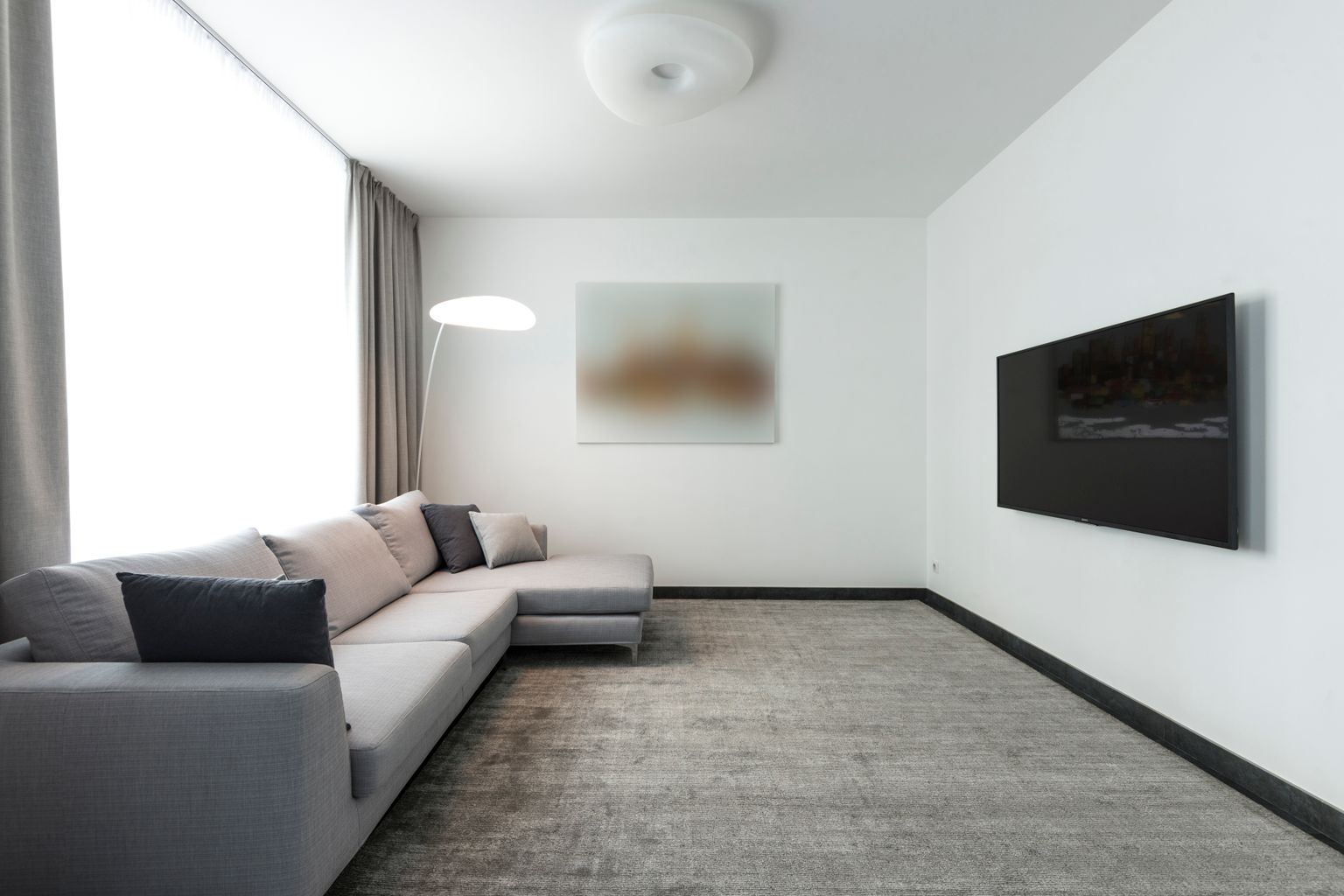
If your sofa is wide or people watch from the side, this matters. The QNED86A uses an IPS panel, which is one of the better LCD types for angles, yet it still loses about 61% of its brightness at 45 degrees. The C6 loses about a third. In practice, the person at the far end of an L-shaped couch sees a noticeably flatter picture on the QNED.
Is QNED Brighter Than OLED?
It depends which models you compare, and this is where a lot of older articles are now out of date. For years the rule was that LCDs got brighter than OLEDs, and that’s still true when you compare a flagship Mini LED QNED with an entry OLED like the B6. But in the mid-range, the picture has flipped: the C6 measured roughly double the peak HDR brightness of the QNED86A.
Where QNED still holds an edge is full-screen brightness. An LCD backlight can keep a big white or bright sports scene lit evenly, while OLEDs dim large bright areas to protect the panel. If your room faces the sun and you mostly watch daytime sports or news, a good QNED Mini LED will look punchier across the whole screen. If you watch in the evening, OLED’s brightness is more than enough.
QNED vs OLED for Gaming
OLED is the stronger gaming TV, and it isn’t close at this tier. The C6 supports up to 165Hz with variable refresh rate from 40 to 165Hz, compatible with consoles and PCs, and it has near-instant pixel response, so fast motion stays sharp. The QNED86A tops out at 120Hz with a narrower VRR range. Input lag is excellent on both (about 5 ms vs 6 ms), so casual players won’t feel a difference in responsiveness.
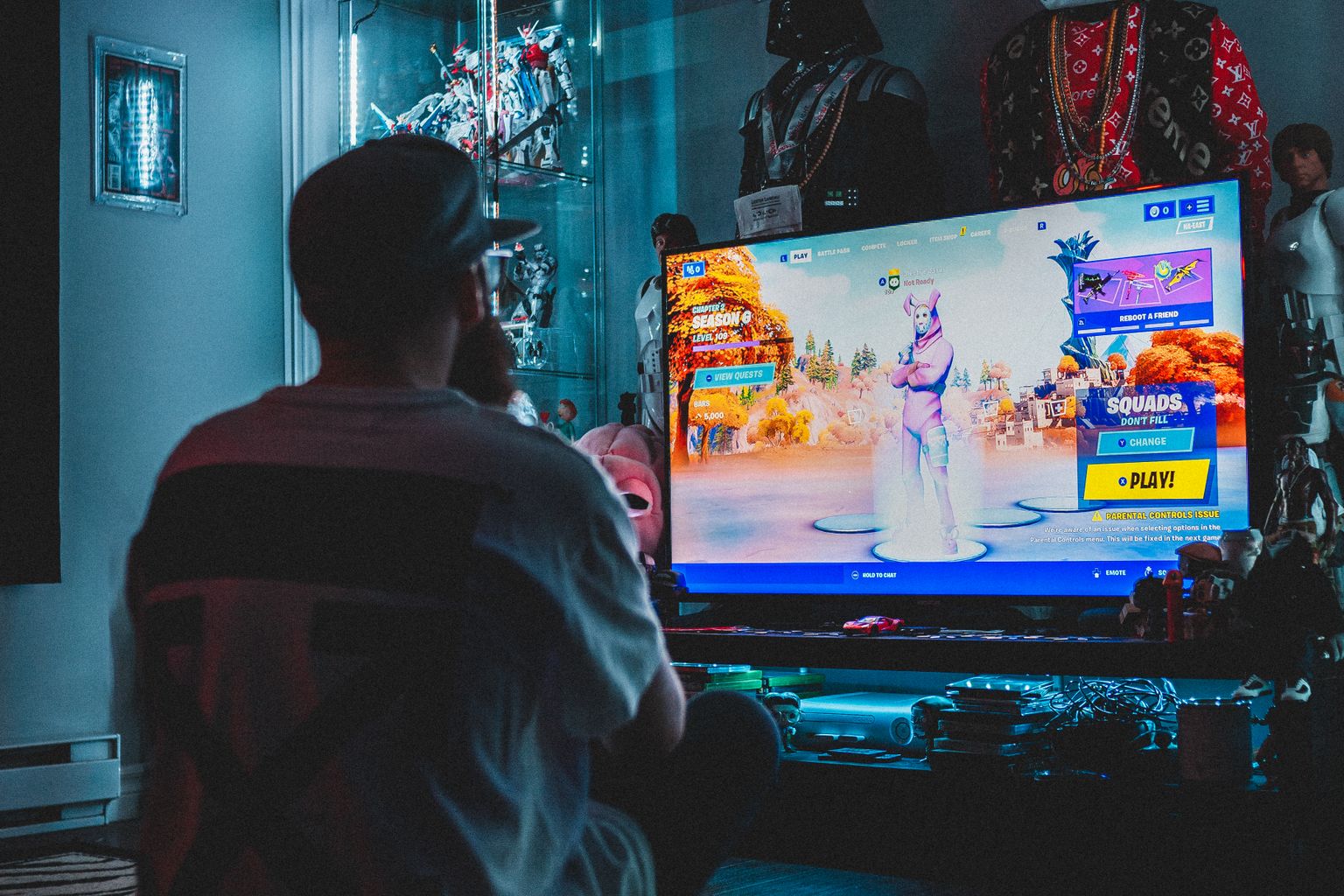
The one case where QNED has an advantage is long sessions of games with fixed elements on screen, like health bars, minimaps and scoreboards. These are the kind of static images that can contribute to OLED burn-in over time.
LED vs OLED: Lifespan and Burn-In
Lifespan is the part of the LED vs OLED comparison people worry about most, and it deserves a straight answer.
Does OLED Burn In?
Yes, it can, but modern OLEDs are far more resistant than the early ones. LG’s panels use pixel shifting, logo dimming and automatic refresh cycles that run while the TV is on standby. For normal mixed viewing, such as movies, streaming shows and varied games, most owners never see burn-in. The risk rises if the same static image sits on screen for many hours every day: a 24-hour news ticker, a stock chart, or the same game HUD for months. LG also offers longer panel warranties on its premium OLEDs (three years on the G6 in some markets), which tells you something about its confidence.
Which Lasts Longer?
QNED cannot burn in, because the LCD layer doesn’t degrade from static images. Its LED backlight will slowly dim over many years, but that happens evenly across the screen. OLED’s organic materials also lose brightness with age, and the bigger concern is uneven wear. For typical use of four to six hours a day, both should last well past the point where most people upgrade. If you plan to keep a TV for ten years as an always-on display in a shop, kitchen or office, QNED is the safer choice.
QNED vs OLED Price: Which Is Better Value?
This is QNED’s biggest win. A 65-inch LG QNED85A was regularly on sale for around $600 to $700 at US retailers, while the 65-inch C6 OLED launched at $2,699. Even with discounts on the C6 later in the year, you are usually paying two to three times more for OLED at the same screen size.
That price gap also changes the size you can afford. For the cost of a 65-inch OLED, you can often buy a 75 or 86-inch QNED. If you sit far from the screen or want a big screen for sports, the bigger QNED may give you more enjoyment than a smaller, better OLED.
Here’s a rough way to think about value:
- Budget under $1,000: QNED is the clear pick. OLED options at this price are usually small sizes or older models.
- Around $1,500 to $2,000: Compare a QNED Mini LED (QNED90 class) with an entry OLED like the B6. The OLED wins in dark rooms, the Mini LED in bright ones.
- $2,000 and up: OLED (C6 or G6) gives you the best picture quality LG makes, unless you need a very large screen.
Which Should You Choose, QNED or OLED?
Pick the TV that fits how and where you actually watch.
Choose OLED If:
- You watch movies and shows mostly in the evening or in a dark room
- Deep blacks and contrast matter more to you than raw size
- You play fast games on a PS5, Xbox or gaming PC and want 144Hz+ support
- People often watch from wide angles
Choose QNED If:
- Your room gets lots of daylight and you watch during the day
- You want a big screen (75 inches and up) on a moderate budget
- You leave static content, news or sports tickers on for long periods
- You want zero burn-in worry for a TV you’ll keep for many years
If you’re stuck in the middle, a QNED Mini LED is the best compromise. It closes much of the contrast gap, gets very bright, and still costs less than a C6 at most sizes. If you’d rather look beyond LG, our Sony BRAVIA 9 review shows how far a flagship Mini LED can push contrast.
Conclusion
The QNED vs OLED decision is really a question about your room and your budget. OLED gives you the better picture, with perfect blacks, wider viewing angles and stronger gaming features, and at LG’s mid-range it is now brighter too. QNED gives you a lot of screen for the money, handles bright rooms well, especially in Mini LED form, and never burns in. Watch at night and care about every detail? Go OLED. Watch in daylight, want a huge screen, or need a TV that runs all day? Go QNED. For more TV and gadget buying advice, browse the latest guides on Best Electronics Guide.
Frequently Asked Questions
Q.Is QNED better than OLED?
A. For picture quality, no. OLED has better contrast, black levels, viewing angles and motion. QNED is better for price, bright rooms on Mini LED models, and long-term burn-in safety.
Q. Is QNED the same as QLED?
A. They are close relatives. Both are LCD TVs with quantum dots. QLED is mainly Samsung’s term, while QNED is LG’s version, which adds its NanoCell filter layer and often a Mini LED backlight.
Q. Is QNED a real LED TV?
A. Yes. QNED is a type of LED-backlit LCD TV. The “LED” part refers to the backlight, not to self-lit pixels like OLED.
Q. Which is better for your eyes, QNED or OLED?
A. Neither is harmful for normal viewing. OLED’s perfect blacks can feel more comfortable in a dark room because there’s no glowing gray backdrop. A brighter QNED can be easier on the eyes in a sunny room where a dimmer screen would make you squint. Using a sensible brightness setting matters more than the panel type.
Q. Is OLED worth the extra money over QNED?
A. If you watch a lot of films or play games in a darker room, most people find the OLED upgrade worth it. If you mostly watch daytime TV or want the biggest screen your budget allows, the savings from QNED go further.
Q. How long do QNED and OLED TVs last?
A. Both commonly last many years with normal daily use. OLED can lose brightness unevenly with heavy static content, while QNED dims slowly and evenly. For most households, either one will last until you want to upgrade anyway.

2 comments
[…] Brightness is the headline. Empire measured highlight peaks above 2,800 nits on its 75-inch set, and Notebookcheck reported about 775 nits on a full white screen, against roughly 317 for LG’s 2024 G4 OLED. […]
[…] most people expect. A good 4K OLED or Mini LED will beat a cheap 4K LCD by a wide margin, and our QNED vs OLED comparison explains why. If you want to see what a high-end 4K set does with HDR and motion, the Sony Bravia 9 […]