

Table of Contents
Quick answer: A full range speaker is a loudspeaker that uses a single driver to reproduce as much of the audible spectrum as it can, from bass through the midrange and up into the treble, without splitting the signal between separate woofers and tweeters. There’s no crossover inside, so every note comes from one cone, which is why fans praise these speakers for coherent, natural-sounding vocals. The catch is physics: one cone can’t move enough air for deep bass and stay light enough for crisp highs at the same time. So if you’ve been wondering what a full range speaker is and whether it beats a 2-way or 3-way design, the short answer is that it trades extension at the frequency extremes for simplicity and a midrange that sounds all of a piece. Below, we’ll cover how they work, where the term gets confusing (car audio uses it very differently), and which design makes sense for your room or car.
What is a full range speaker, exactly?
A full range speaker is built around one drive unit that tries to cover the whole audible band on its own. Wikipedia’s entry on the full-range speaker defines it as a driver that “reproduces as much of the audible frequency range as possible, within the limitations imposed by the physical constraints of a specific design.” Notice the hedge in that definition. Human hearing runs roughly from 20 Hz to 20 kHz, and very few single drivers hit both ends with the same loudness.
Most home audio full range drivers are between about 3 and 8 inches across. Smaller ones sound clearer up top but give up bass. Bigger ones dig lower but start to lose detail in the treble. Designers pick a size based on what the speaker is for, then shape the cone, the enclosure and sometimes a small secondary cone to stretch the range further.
Is “full range” the same as “single driver”?
In home hi-fi, yes, mostly. A “full range” or “single driver” speaker means one cone per cabinet. Some designs add a separate subwoofer underneath, but the main speaker still runs without a crossover.

Why does the term confuse people?
Because car audio and pro audio use it differently. In car stereo catalogs, “full range speakers” usually means coaxial speakers: a woofer with a small tweeter mounted in front of it, sold as one unit. Orion’s own guide to full range car speakers describes them as multi-driver systems with a built-in crossover. In pro audio, a “full range cabinet” is a PA box that can play the whole band without a sub, again usually with two or more drivers. Strictly speaking, Wikipedia notes that coaxial speakers with separate concentric elements “are not, strictly, classified as full-range drivers.” So when you shop, check the spec sheet for the number of drivers rather than trusting the label.
What are the top full range speaker brands?
Most single-driver speakers you’ll hear in hi-fi come from a small group of specialist driver makers. Here are five worth knowing, whether you’re buying a finished pair or building your own.
1. Fostex
Fostex is a Japanese brand and part of Foster Electric. It’s probably the best-known name in full range drivers. Its FE series, including the FE83, FE103, FE126 and FE166 in their various revisions, uses light paper cones. The drivers are also very efficient. That makes them a favorite for back-loaded horn cabinets and small tube amps. The FE103 in particular has been a starting point for DIY builders for decades.
Best for: Horn-loaded builds and low-power tube amps.
2. Mark Audio
Mark Audio was founded by designer Mark Fenlon. Its Alpair and CHN driver lines use thin metal-alloy cones with no whizzer. The goal is to get smooth treble out of the main cone alone. The drivers are known for clean mids and wide bandwidth for their size, and they’re popular in compact desktop and bookshelf builds.
Best for: Near-field and desktop speakers with a neutral, detailed sound.
3. Lowther
Lowther is a British maker that has been building full range drivers since the 1930s. Its drivers use whizzer cones and powerful magnets, and they’re among the most sensitive drivers made. They’re usually mounted in large horn enclosures. Lowthers sound fast and vivid, but they can be bright in the wrong cabinet and cost more than most rivals.
Best for: Enthusiasts building large horn systems around very low-power amps.
4. Tang Band
Tang Band is a Taiwanese manufacturer that makes affordable full range drivers in sizes from about 2 to 8 inches. Its cones come in paper, bamboo fiber and aluminium. Models like the W3-881SJ are common in budget DIY kits and small desktop speakers, so Tang Band is an easy way to try single-driver sound without spending much.
Best for: Budget DIY projects and first-time builders.
5. Dayton Audio
Dayton Audio is the house brand of US retailer Parts Express. It sells a wide range of small full range drivers, including the PS95, ND91 and RS100 families, along with ready-made kits. The drivers are inexpensive, consistent and well documented with published specs, which makes it easy to design a cabinet around them.
Best for: Value-focused builds, kits and small multi-room or desktop setups.
Top full range brands at a glance
| Brand | Origin | Known for | Price range |
|---|---|---|---|
| Fostex | Japan | Efficient paper-cone FE series, horn builds | Mid |
| Mark Audio | Hong Kong / UK designer | Metal cones, no whizzer, wide bandwidth | Mid |
| Lowther | UK | Whizzer cones, very high sensitivity | High |
| Tang Band | Taiwan | Affordable drivers in many sizes and cone materials | Low |
| Dayton Audio | USA | Budget drivers and kits with full specs | Low |
How does a full range speaker work?
It works the same way any dynamic speaker does: the amplifier sends current through a voice coil sitting in a magnetic field, the coil pushes the cone back and forth, and the cone moves air. The difference is that the full range driver gets the entire, unfiltered signal straight from the amp.
That one cone has to do two jobs that pull in opposite directions:
- Bass needs a large surface and a long back-and-forth stroke to move plenty of air.
- Treble needs a small, light, stiff surface that can start and stop thousands of times a second.
What is a whizzer cone?
A whizzer is a tiny secondary cone glued near the center of the main cone, where the voice coil attaches. At high frequencies the big cone can’t keep up, so the inner section and the whizzer do most of the work. That lifts treble output and spreads the highs over a wider angle. You’ll spot whizzers on many vintage and boutique full range drivers. They help, but they can also add some coloration, which is one reason designers argue about them.
Why do full range speakers “beam” the treble?
Once a sound’s wavelength gets close to the size of the cone, the sound starts to focus straight ahead instead of spreading out. At 10 kHz the wavelength is only about 3.4 cm (sound travels at roughly 343 meters per second), so a 6.5-inch cone sends those highs out in a narrow beam. Sit off to the side and the treble drops. This is why full range speakers often sound best when you toe them in toward your listening seat.
What are the pros and cons of full range speakers?
Full range speakers win on coherence and simplicity and lose on bass depth and treble extension. Here’s how that plays out.
Advantages
- No crossover in the signal path. Crossovers split the audio and can shift timing between drivers around the crossover point. With one driver there’s nothing to split, which fans describe as better phase coherence.
- A true point source. All the sound comes from one spot, so voices and acoustic instruments tend to image precisely between the speakers.
- Often high sensitivity. Many full range drivers are efficient, so they pair well with low-power amplifiers, including small tube amps.
- Compact and affordable. One driver and no crossover parts keep the cabinet small and the parts list short.
Disadvantages
- Limited bass. Small drivers start rolling off somewhere in the low hundreds or high tens of hertz, depending on size and enclosure. Kick drums and bass synths lose weight.
- Treble roll-off and beaming. Highs may fade above 15 to 18 kHz and narrow off-axis.
- Distortion when pushed. Because one cone handles big bass movements and fine treble detail at the same time, loud playback can cause intermodulation distortion, where the frequencies muddy each other.
- Picky about the box. High-end full range designs often rely on large or complex cabinets, such as back-loaded horns or transmission lines, to squeeze out more bass.
How does a full range speaker compare to 2-way and 3-way speakers?
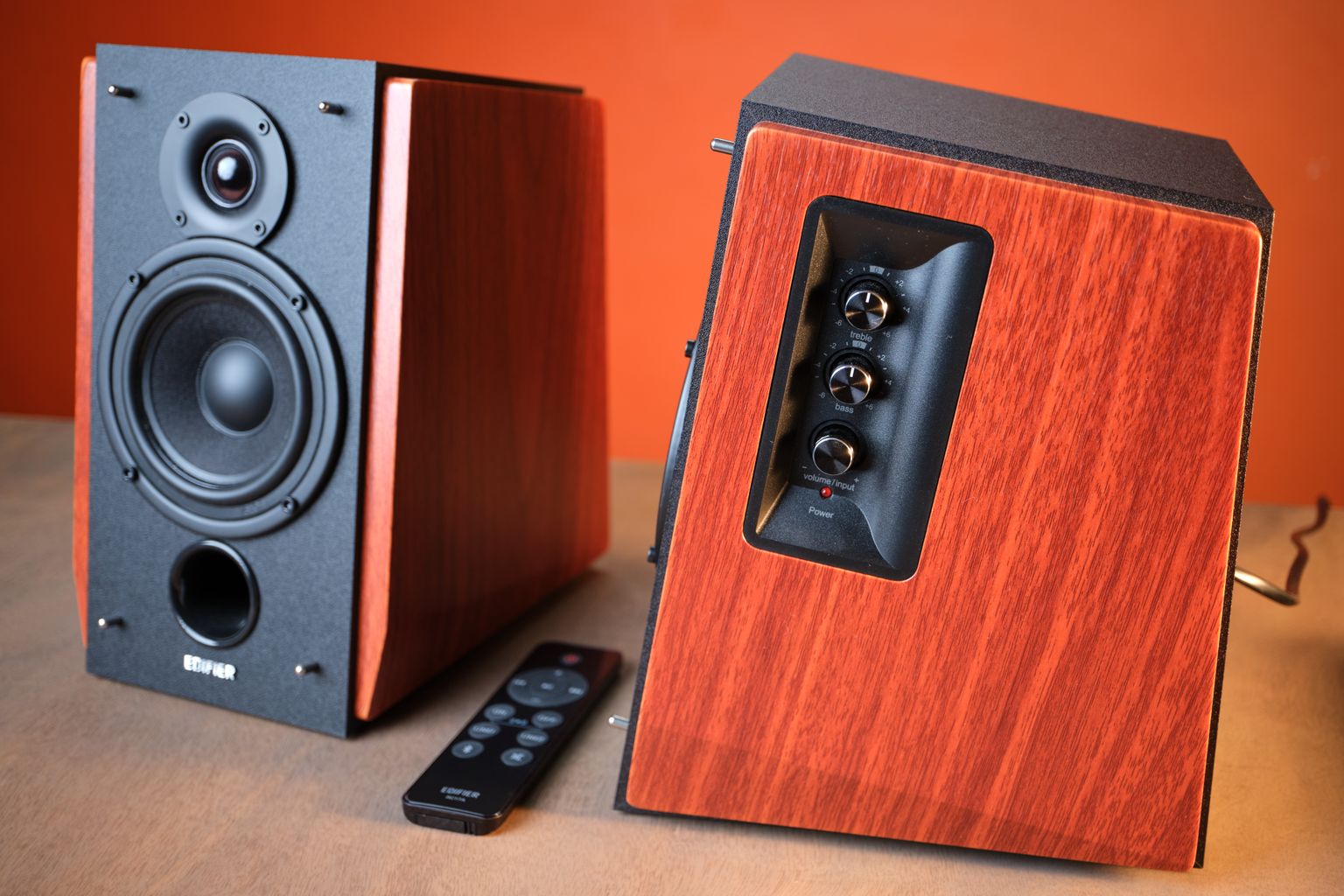
The core difference is how many drivers share the work. A full range speaker uses one driver for everything. A 2-way speaker splits the signal between a woofer and a tweeter. A 3-way adds a dedicated midrange driver between them. Each extra driver lets the parts specialize, but it also adds a crossover and more chances for the drivers to not blend well.
What is a 2-way speaker?
A 2-way speaker has a woofer for bass and midrange and a tweeter for treble. A crossover network, usually built from capacitors and inductors, sends low frequencies to the woofer and high frequencies to the tweeter. The split point in most bookshelf models falls somewhere around 1.5 to 3.5 kHz. That puts the handoff in the upper midrange, which is the most common layout you’ll find on bookshelf speakers, studio monitors and car coaxials.
What is a 3-way speaker?
A 3-way speaker adds a midrange driver, so the woofer only handles bass, the midrange driver covers vocals and most instruments, and the tweeter takes the top end. The two crossover points typically sit somewhere around a few hundred hertz and a few kilohertz. With each driver working in a narrower band, a good 3-way can play louder with lower distortion and deeper bass. The trade-off is cost, cabinet size and a more complex crossover that has to be designed carefully so the three drivers sound like one.
Full range vs 2-way vs 3-way at a glance
| Feature | Full range | 2-way | 3-way |
|---|---|---|---|
| Drivers | 1 | Woofer + tweeter | Woofer + midrange + tweeter |
| Crossover | None | One crossover point | Two crossover points |
| Bass depth | Limited | Good for the size | Deepest of the three |
| Treble extension | Rolls off, beams early | Extended | Extended |
| Midrange coherence | Excellent, single source | Good, depends on crossover | Very good with a well-designed crossover |
| Max clean volume | Low to moderate | Moderate to high | High |
| Efficiency with small amps | Often very high | Average | Average to lower |
| Size and price | Smallest, cheapest | Mid | Largest, most expensive |
| Best for | Near-field, vocals, low-power amps | Most rooms and desks | Large rooms, home theater, loud playback |
Which sounds better: full range or 2-way?
For most people in most rooms, a decent 2-way will sound fuller because it has a tweeter for air and detail and a woofer for weight. A full range speaker can sound more natural and “of one piece” on vocals, acoustic guitar and small jazz groups, especially at moderate volumes and close listening distances. If you mostly play electronic music, rock or movies, the 2-way is the safer pick.
Is a 3-way speaker always better than a 2-way?
No. More drivers don’t guarantee better sound. A well-designed 2-way often beats a cheap 3-way, because a budget 3-way spreads its cost across more drivers and a more complex crossover. In a small room at normal volumes, a quality 2-way is usually enough. The 3-way earns its price in bigger rooms and at higher volumes, where the dedicated midrange keeps vocals clean while the woofer is working hard.
Where are full range speakers used?
You’ve probably listened to more full range drivers than you realize. They show up wherever space, cost or simplicity matter more than deep bass:
- TVs and laptops, where thin cabinets leave room for small drivers only. If you’re weighing a TV’s built-in audio, our Sony Bravia 9 review shows how much a set’s speaker layout affects dialogue clarity.
- Ceiling speakers for background music in shops, offices and restaurants.
- Portable and smart speakers, many of which use one or two small full range drivers with a passive radiator for bass.
- Headphones, where most models use a single dynamic driver per ear. It’s the same idea scaled down, which is why comparisons like Beats Studio Pro vs Beats Solo 4 focus so much on driver tuning.
- DIY and boutique hi-fi, where hobbyists build single-driver cabinets around drivers from brands like Fostex, Mark Audio and Lowther.
- Desktop and near-field setups, where you sit close enough that beaming and limited bass matter less.
Are full range car speakers different?
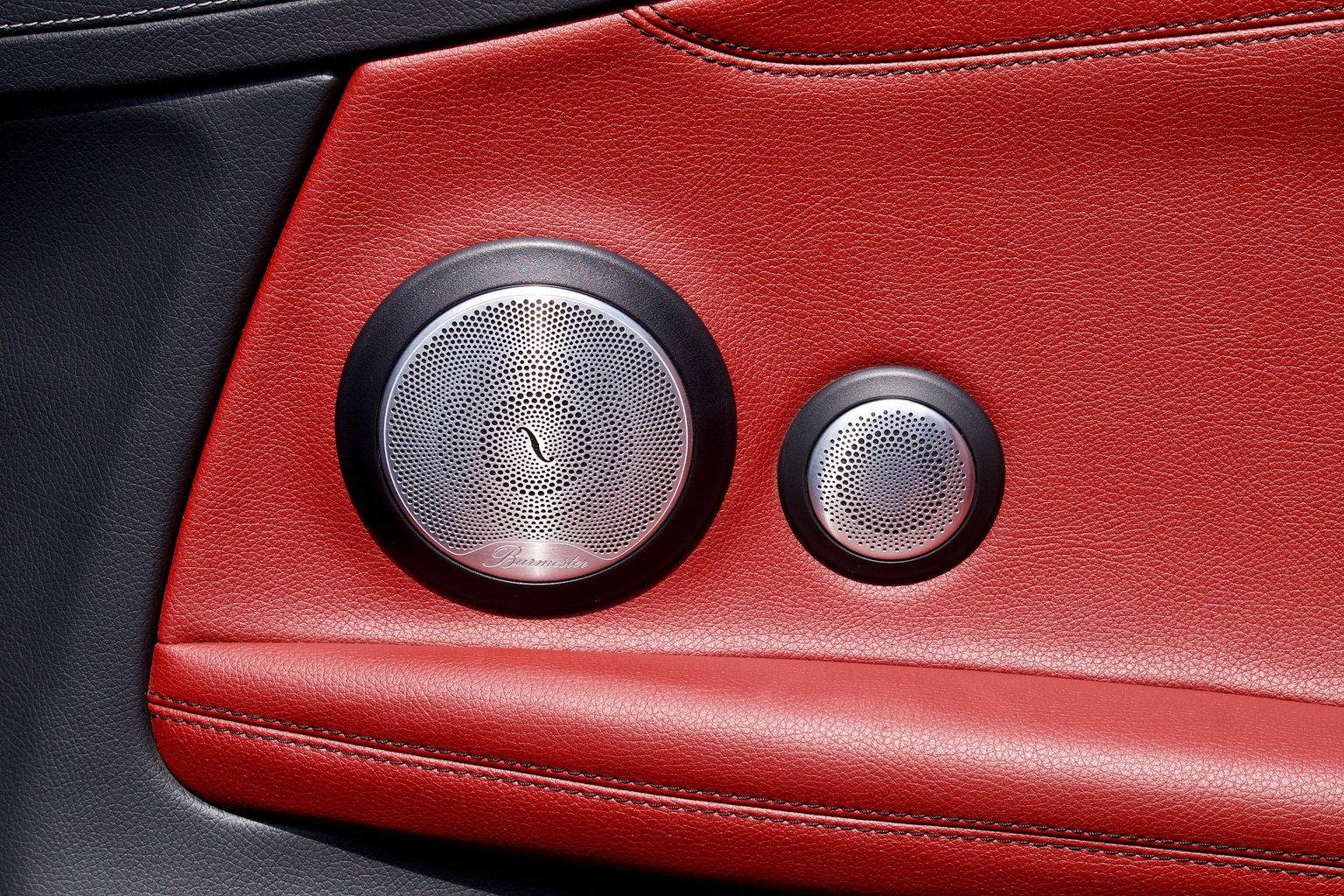
Yes. When a car audio store says “full range,” it usually means a coaxial 2-way or 3-way speaker that drops into a factory location, such as a 6.5-inch door speaker or a 6×9 in the rear deck. The tweeter is mounted on a post in front of the woofer, and a small crossover is built in. The alternative in car audio is a component set, where the woofer, tweeter and crossover are separate parts you mount in different spots.
Should you buy coaxial or component car speakers?
Coaxial “full range” speakers are the easier upgrade: they fit stock holes, need no extra wiring and usually run fine off a head unit. Component speakers let you put the tweeters up near ear level on the dash or A-pillar, which gives better imaging, but they take more work to install and often benefit from an amplifier. For a simple factory replacement, go coaxial. For a build where sound staging matters, go component.
How do you choose between a full range speaker and a multi-way speaker?
Start with how you listen, not with the spec sheet. Use these questions:
- How far away do you sit? At a desk or in a small room (under about 3 meters), full range speakers do well. In a large living room, a 2-way or 3-way fills the space better.
- What do you play? Vocals, folk, classical and jazz suit full range drivers. Bass-heavy music and movies point to multi-way speakers, or a full range pair plus a subwoofer.
- What amp do you have? A low-power tube or class D amp is a good match for efficient full range drivers. A big receiver can drive anything.
- How loud do you play? If you like it loud, get more drivers. Full range speakers strain first.
- Will you add a subwoofer? Pairing a full range speaker with a sub covers its biggest weakness. Set the sub’s crossover around where the main speaker starts to roll off.
Our take: if you’re curious about single-driver sound, a small full range pair on a desk with a modest sub is a cheap and rewarding experiment. If you want one pair of speakers to do everything well in a normal living room, buy a good 2-way.
Conclusion
A full range speaker uses one driver to cover bass, mids and treble, so there’s no crossover and every note comes from the same spot. That gives you coherent, natural vocals, high efficiency and a compact, affordable cabinet. What you give up is deep bass, the last bit of treble sparkle and the ability to play really loud. A 2-way splits the work between a woofer and a tweeter and suits most rooms and most music. A 3-way adds a dedicated midrange driver, which pays off in bigger rooms and at higher volumes. If you sit close and mostly listen to vocals or acoustic music, try a full range pair built on drivers from Fostex or Mark Audio, ideally with a small subwoofer. In car audio, remember that “full range” usually means coaxial.
Frequently asked questions
Q: Do full range speakers need a subwoofer?
A: Not always, but most benefit from one. A full range speaker can’t reproduce the deepest bass, so adding a subwoofer fills in the low end, especially for movies and bass-heavy music.
Q: Do full range speakers have a crossover?
A: A true single-driver full range speaker has no crossover. Coaxial “full range” car speakers and PA cabinets do have a small built-in crossover because they contain more than one driver.
Q: Is a coaxial speaker a full range speaker?
A: In car audio, coaxial speakers are commonly sold as full range speakers. Technically they’re 2-way or 3-way designs, because they have a separate tweeter mounted in front of the woofer.
Q: Can a full range speaker reproduce 20 Hz to 20 kHz?
A: In practice, very few can at equal loudness. Most single drivers roll off in the bass well above 20 Hz and lose some output at the very top of the treble.
Q: Are full range speakers good for home theater?
A: They work for dialogue and background audio, but for a proper home theater you’ll want multi-way speakers or a full range setup supported by a subwoofer to handle explosions and low-frequency effects.
Q: What size are full range speakers?
A: Home audio full range drivers are commonly 3 to 8 inches. Car “full range” (coaxial) speakers come in standard fitments like 5.25, 6.5 and 6×9 inches.


1 comment
[…] quality matters too, because you’ll hear every answer through a small speaker. Our guide to the full-range speaker explains why compact smart speakers often sound thinner than their size suggests. Google also says […]